
Ideological Misinformation

The power we bestow upon news outlets comes with an inherent authority and trust. What happens when that trust is misguided, and what happens when we lack the cynicism and skepticism to determine fact from fiction? In those moments where we fall victim to fake news, we reduce ourselves to nothing more than puppets to the indoctrination of political ideologues both far-right and far-left. Not only that, but we also serve to widen the rift between ourselves, fueling the toxicity. Avoiding fake news and indoctrination is only possible for some of us. For many regardless of fact, fake news speaks to what they want to hear and that is all that matters.

Photo by Utsav Srestha on Unsplash

No one is above fake news, we are all susceptible to it. Fake news succeeds in many different scenarios whether that be due to media illiteracy, lack of options, or a desire to buy what an article is selling their reader. Censorship plays a major role in enabling fake news. We see this frequently in the modern day with white supremacists who are banned from social media platforms. The problem arises since banning white supremacists (and other extremist groups) from social media may remove that speech from a particular platform, but it only validates those pushing it in their eyes. When a platform like Twitter removes white supremacist fake news it doesn’t stop that news from existing, but rather it stops that news from being rebuked in a public forum. The ACLU has been critiqued mercilessly over defending both white supremacists and terrorists on the grounds of free speech. However, that protection is vital to preventing the rise of those ideologies. If someone susceptible to white supremacist fake news sees white supremacists speaking on an open platform, then it is likely they’ll see many people rebuking them with logical counterarguments. However, if the same person can’t see that discourse on an open platform they may then look for that viewpoint on their own. Therefore, circumventing the counterarguments, and playing directly into the hands of those who want to indoctrinate them into their field of thought. Simply put, protecting people from hearing and seeing evil rhetoric isn’t protecting them.

How then can we prevent fake news? Well, the answer is we can’t, but there are many ways we can prevent our indoctrination by it. The simplest and most effective solution is to increase the quantity of our consumption of news. Increasing the variety of news we intake on a particular subject will allow us to see multiple viewpoints on the same topic and help us to understand thoughts on said topic regardless of our personal bias. Anyone can seek out this solution, but they have to have a desire to be informed objectively as opposed to being lead into their subjective field of thought. I’ve witnessed the latter numerous times in discussion-based courses where individuals would argue based on ideology rather than information. However, when those speaking on ideology rather than information are called on it their points begin to falter very quickly and their bias is on display for all to see. Together by providing open platforms for free speech regardless of how abhorrent and ideologically driven that speech is, and by an increase in the variety of sources of news we intake, we can help to combat fake news and prevent indoctrination.

Modern Product Placement, Will it Stick?

To sell a product people need to know about it, it needs to remain in their thoughts well after the advertisement’s end. Picture yourself running a business, you make a product you know will sell well if it draws enough attention, so how do you then turn your product into a spectacle? For Beats headphones by Dr. Dre, the answer was to fill every product placement slot imaginable. Years went by where it was hard to go a few days at a time without catching some product placement from Beats. Music videos would come on and conveniently the musicians would be wearing Beats. Later on, maybe you’d turn on a movie or show, and there are Beats again, or perhaps you’re just catching a post-game press conference for a sporting event you watched and your team’s star athlete just happens to be wearing Beats. The ad campaign was wildly successful turning Beats into a household name and leading to them becoming the most popular headphone brand in the world. Beats took one type of approach. They threw out as many product placements as they could and just hoped something would stick.

Photo by Wojtek Witkowski on Unsplash

However, product placement is tricky it’s becoming increasingly easy to seem disingenuous. One example of this is a mobile game app called Raid Shadow Legends. The game has become infamous because if you click on a YouTube video, even if it is in a wildly unrelated field, there is a very solid chance the video includes a paid sponsorship from the game. The approach they take is to make YouTubers seem like they enjoy and actively play the game, however, this is where it seems disingenuous. It is painfully obvious that many of these YouTubers don’t play the game. This is where the difference in perception from Beats arises. Beats sold themselves as a luxury, one that was conceivable that athletes, characters, and musicians alike would wear. This isn’t to say the game is a financial flop, quite the contrary it has been wildly popular, that’s why they’ve begun this ad campaign, to continue their success. Nevertheless, throwing all their eggs into the basket of product placement hasn’t quite worked too well for their brand’s image, contrary to that of Beats.

Furthermore, it’s not uncommon to see episodes of popular TV shows or even viral videos dedicated to a product. In what can at times seem like an overwhelming display of product placement and at other times can seem so brilliantly and sneakily executed it’s hard to find the line. Much like with product placement you have to understand your base, and the platform being used to sell to said base. Do the shows and videos mesh with your base, and do they seem genuine? These are important questions to consider, and as a consumer, it’s easy to distinguish the good from the bad. There’s been an evolution in product placement I’ve already mentioned two examples the most prevalent being placement in YouTube videos, a clear appeal to the youth. The other being in dedicated episodes of TV shows or videos, an approach that seems to be more for large corporations willing to stretch their advertisement budget to the max. These complex evolutions are all for naught though if one doesn’t understand their base, in a world so digitally connected it’s easy to seem out of touch. Recently, we saw Peloton struggle with being out of touch in a Christmas ad that has been criticized for being sexist. Whether you interpret it that way is up to you, however, one thing not up for debate is the impact it had on the company. Their stocks plummeted. An ad designed to boost sales and growth for shareholders created the very opposite. That’s the power of persuasion and that is the importance of knowing who you’re selling to.

Unity and Propaganda

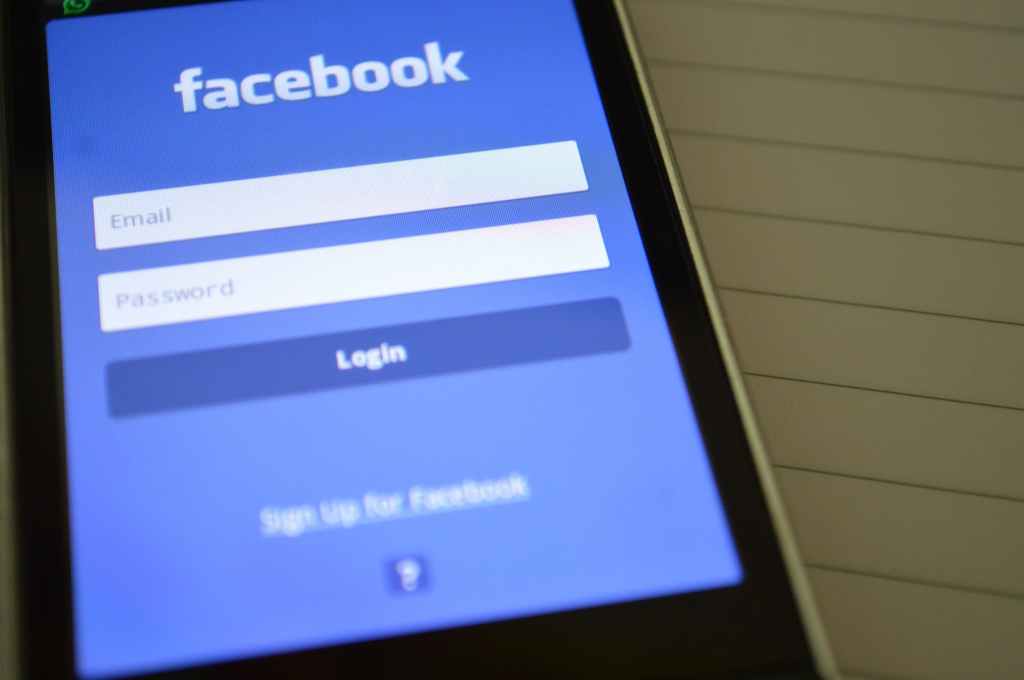
There are countless pros and cons to social media networks. While watching “The Facebook Dilemma” I couldn’t help but put them together to try and ultimately decide whether social media is inherently a good or a bad thing. However, I ran into an issue, that being, social media isn’t inherently good or bad, it is only as good or bad as the people using it and the company regulating it. When it comes to a platform like Facebook some objectively good and some objectively bad things have come out of it, but where does Facebook’s impact lie on a spectrum of good or bad?

Photo by Pixabay from Pexels

Firstly, Facebook accomplished its goal to use technology to connect the world. This has been used to do incredible things, such as uniting people for a common goal, like we saw in Arab Spring where many people in places like Tunisia and Egypt used Facebook as a tool to organize massive protests, which shockingly worked. They achieved their political goal and the president of Egypt resigned. Furthermore, it increased a sense of being connected by allowing people to share stories, statuses, articles, memes, and more with friends and acquaintances whenever they want.

Furthermore, certain entities would take note of these positives and sway them for their agenda. After witnessing the impact Arab Spring had on the political landscape it became very clear that this tool could be used by people to fuel political change. However, with that brought forth a scary reality, the potential to misuse such a powerful tool to mobilize people with propaganda. That’s exactly what happened when Russian interests in Ukraine were peaking. Propaganda ran rampant from Russian sources operating through accounts of people who weren’t real. They began by using it to achieve their political goals in Ukraine. However, Russia pushed its interests into the home of Facebook by using the same propaganda tactics that worked for them in Ukraine, in the 2016 United States presidential election. Many debate whether or not it had an impact, but one thing is certain and that is that a powerful political tool was used to fuel the divide in the United States, and spread propaganda and misinformation.

Facebook has its interests too. Originally, higher-ups at Facebook stated repeatedly, our information wouldn’t being shared with anyone other than who we chose and that it wouldn’t be for sale, but when the investors started coming and the company’s growth started to stagnate, there was nowhere else they looked then to our information to bail them out. Ultimately, it’s for us to decide on the spectrum of good and bad where Facebook falls. These brief examples are just a few of the many positives and negatives of Facebook, and when you have a platform that large, with a user base as diverse as Facebook’s you are bound to run into people who have bad intentions and people who will want to use the platform for their interests. However, Facebook has interests too and as time passes by, their original “hands-off” approach becomes much more distant from the truth, and their control over Facebook and the things that are allowed to be said, is becoming increasingly Orwellian.

Relationships in the Digital World

What happens when relationships cross the threshold into the digital world? There’s only one answer to that question for me and that is, I believe digital relationships are incredibly complex and truly do connect us. Often we hear of this theme that technology can connect us to the digital world while simultaneously disconnecting us from the analog world like a mindless zombie. I have no doubts that in some cases that’s true and that technology can have a propensity to be very distracting, however, technology is a tool and when utilized correctly it can not only connect you to relationships in the digital world but also ones in the analog world while fostering complex relationships and carrying complex conversations miles away.

Furthermore, my greatest example of how technology can be pertinent to complex relationships is via my friendship with someone I met online. We met nearly eight years ago in a video game called “Rust” and to this day we are still best friends. We have never met, and yet we have an incredibly complex friendship. Alongside talking every day we’ve spent many thousands of hours playing video games and just “hanging out” even though we live over a thousand miles apart. I would raise the point that we are even closer than any of my “real” friends because I seldom communicate with friends I knew from high school before moving to Omaha and seemingly the same phenomena happened when I moved from middle school to high school, yet not a day has gone by in about five or six consecutive years where I haven’t had an extensive and complex conversation with my friend. Those five or six years span the same time I went from middle school to high school and high school to college and while all the friends I knew in person seemingly disappeared my relationship with my friend remained a constant.

Photo by Florian Olivo on Unsplash

Nevertheless, it’s well known that a large sum of online communication is done non-verbally through the means of texts, emails, and other mediums. While many rightly make the case that we lose out on emotion and the important ques of body language, my counter to that is that non-verbal communication encourages one to get a deeper understanding of those they find themselves having recurring conversations with, so they can interpret the emotion behind the messages they’re sending. Just like how body language gives ques if you get to know someone online well enough they too give subconscious ques through the way they text that can be interpreted if you know them well enough. The ques are so apparent that even computer algorithms can detect them.

Ultimately, technology can be damning for many relationships, but if you use it as the tool it is, you can not only bolster existing relationships but also create new lasting ones. Therefore, technology’s inherent ability to connect us doesn’t have to simultaneously disconnect us from the analog, it’s all about one’s use of it. Finally, if you do rely on technology for many conversations, or you feel disconnected by technology, take the initiative to learn the ques of those close to you and it will truly improve your digital relationships.

Disconnected and Discontent

Time can pass rather quickly or rather slowly depending on a myriad of factors. I had been tasked with spending four hours without technology, a seemingly trivial task. Unfortunately, in this little experiment time was a victim of circumstance and slowed to the pace of a sloth, but why? I had plenty to do in the downtime and I occupied my time well with homework, and friends, yet time still seemed incredibly sluggish.

Photo by William Hook on Unsplash

For starters, while trying to pass the time, I kept habitually reaching to my left pocket for a phone that wasn’t there, and constantly could’ve sworn I felt the buzzing of a text message coming from my pocket, meanwhile, the phone was completely shut off and remained across the room. My mind had begun to play tricks on me, clearly craving the precious dopamine it receives from my phone. It became almost a tick and after short intervals, I would subconsciously start reaching again to no avail, this made avoiding technology increasingly difficult and proved to me what I craved most about it. I could go without video games, TV, movies, and other forms of entertainment, but I felt so disconnected. Nearly all of the people I frequently talk with are only accessible via my technology. I was disconnected from my closest friend, my girlfriend, my family, and others. It also completely threw off my routine, every day after class I immediately go back to my dorm and hop in a discord call with my closest friend, so we can talk for hours on end, all the while listening to music, and playing whatever video game we’re interested in at the time.

Furthermore, there aren’t many substitutes for the things I use technology for. When it comes to certain things like getting the news there’s an analog equivalent to the digital information I get, that being newspapers. Even TV and Movies can be experienced through a slightly different medium via reading. However, for communication, there is no replacing it. I could write a letter, but then each message sent and received takes days to weeks, and for me only furthers the feeling of being disconnected from the individuals I’d be writing those letters to. There’s also no amount I could ever write that would even begin to carry the same weight and depth of a single conversation I have online every day. I’d lose that important banter between two friends just constantly making fun of one another cracking jokes, but most importantly I’d lose the spontaneity of a good conversation among two people who have talked for a minimum of six to eight hours a day every day for a decade on end and never ran out of things to say. Ultimately, when I disconnect from technology it’s not only technology I am disconnecting from, but the relationships that are such a fundamental part of my life. In conclusion, I learned a lot from the experience, but couldn’t shake the feeling that I was constantly, missing out on the precious moments I share with my friends and family via digital communication. Finally, I’d like to end by saying that just as time was a victim of circumstance so was I, and what I mean by that is due to attending a University out of state my only connection to my home is through technology and perhaps if I was back in my hometown this experiment would be considerably less challenging.

Supply and Demand

Free-market economies are founded on the ideology of supply and demand. When it comes to attention there’s a very finite supply and an ever-increasing demand. The demand for attention as a resource may be higher than any other. Unlike money you can’t make more of it or save it up, what you have is what you get, there are no freebies. In a world, where people, corporations, and jobs are all constantly bidding for our attention it’s easy to feel overwhelmed.

black Samsung Galaxy Note 5
Image Courtesy of Kon Karampelas at Unsplash.com

The finite nature of attention can lead to “FOMO” or the fear of missing out. FOMO is caused because there are only so many things we can actively give our attention to. Therefore, we are bound to be left out eventually from something we just don’t have the attention for. Furthermore, this is where some corporations step in with practices that feed off of FOMO to get your attention. I like to call this cycle the Instagram cycle since that’s where it’s most easily observed. How it works is, either you’re invited to something and cannot go or you’re not invited, people then proceed to post pictures of how fun and exciting it was making sure to document the event and show that they’re there, someone on the FOMO side then observes the image and feels left out, so what do they do in response? Most of the time the response is as follows, they see the image, are saddened by it so it initiates the revenge posting phase of the cycle. In this phase the person who was left out for whatever reason either does there own fun event or goes to some exclusive fun event with friends and is sure to post it, all the while making sure it’ll be observed by the same people who were at the event they missed out on, this creates the cycle and feeds into social media companies increasing market share of the attention economy.

The overwhelming nature of how selective our attention is does not only contribute to the social media cycle depicted above but also shows how oblivious to the limited supply certain industries are. The primary example I can think of at the moment is the over-saturation of streaming services, which inevitably will cause many to fail. Think back to streaming five years ago, there was Netflix and there was Hulu, as well as some exclusive premium channels like HBO which are slightly different, but essentially the same thing. Now, think of streaming today, there is HBO Now, Hulu, Netflix, as well as, Disney Plus, Amazon Prime Video, YouTube TV, CBS All Access, Apple TV, and more in the works. Streaming services most definitely have their pros, specifically two things, exclusive shows, and convenience. The market started with Netflix as a convenience thing, streaming was so much more convenient than regular TV and movies, however, as a result of over-saturation, the only thing keeping most viewers around are exclusive shows. Therefore, we see an interesting trend with newer streaming services like Disney Plus, where as soon as their big-ticket exclusive show is over (The Mandolorian ), many people cancel their subscriptions. Where the market survives is with specific niches or conveniences, it was founded on convenience and convenience is the only thing that can keep this over-saturated market alive. The best example of convenience in modern streaming is with Amazon Prime Video since it comes ‘free’ with Amazon Prime.

Overall the attention economy looks just like any other free-market economy. Our attention is our buying power, and companies are competing to increase their market share in a field where there isn’t much more room for growth. Already we see companies like streaming services hitting the ceiling of the attention economy. Finally, we have to ask ourselves where our attention matters, and what FOMO means to us, because what it boils down to is it’s not just companies competing for our attention, but our friends and our families, and it’s our job to determine with whom our attention lies.

Design a site like this with WordPress.com
Get started